



The main difference in open vs closed colon hydrotherapy is how water and waste leave your body. An open system lets you release into a basin connected to drainage. A closed system routes water and waste through tubing attached to a rectal speculum. The setup also affects therapist involvement and your experience of privacy.
Amber Colonics uses the LIBBE Open System for colon hydrotherapy in Tempe. If you are comparing equipment before your first visit, focus on the session process, the support you want, and whether colon hydrotherapy fits your health needs.
Open vs closed colon hydrotherapy at a glance
Both systems introduce water through the rectum. Their drainage arrangements differ. Exact features and procedures vary by device and provider.
| Feature | LIBBE Open System | Typical closed system |
|---|---|---|
| Water delivery | Gravity-fed water through a small rectal nozzle. | Water enters through tubing connected to a rectal speculum. |
| Waste release | You release around the nozzle into a basin connected to drainage. | Water and waste leave through an outlet tube connected to the speculum. |
| Therapist role | Guidance and support, with privacy options. | The therapist generally stays to manage inflow and drainage. |
| Privacy | Private room and draping. Discuss time alone with your therapist. | Draping and room privacy, with the therapist generally present. |
| Controls | Client-accessible controls on LIBBE. Ask for instructions. | The therapist operates the device controls. |
How the LIBBE Open System works
With LIBBE, you recline on the equipment and use a single-use rectal nozzle. Water enters through the nozzle, and you release water and stool into the basin below. The basin connects to the drainage system. “Open” describes this release route. It does not mean an open treatment room.
The LIBBE manufacturer’s description explains its gravity-fed water delivery, filtration, draping, and disposable nozzle. The equipment features include controls within the client’s reach and temperature monitoring. Ask your therapist to explain the controls before the session starts.
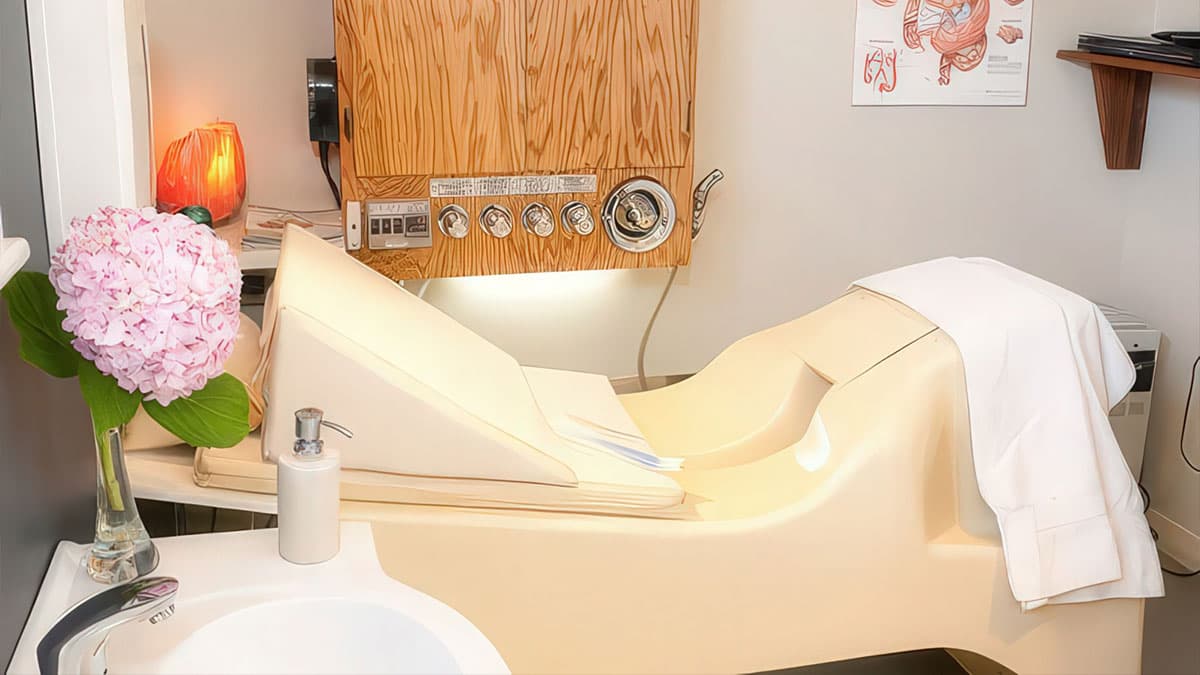
Gravity-fed equipment still creates water pressure. Avoid treating “gravity-fed” as a promise of zero pressure or zero risk.
How a closed system differs
Closed system colon hydrotherapy uses a rectal speculum with connections for incoming water and outgoing waste. Waste travels through the attached outlet hose rather than releasing into a basin. For example, Clearwater’s closed-system supplies include a speculum, inflow tubing, and a waste hose.
The therapist generally remains with you to operate the equipment and manage filling and drainage. You communicate throughout the process and ask to stop if you feel uncomfortable. Confirm who handles insertion and which steps involve direct assistance before you agree to the session.
Water-flow controls differ across devices. Clearwater’s clinical equipment information, for example, describes pressure and temperature monitoring. The words “open” and “closed” alone do not tell you the pressure setting, training standards, or cleaning procedures.
Privacy and therapist support at Amber Colonics in Tempe
Amber Colonics provides the LIBBE Open System in a private room with draping and therapist guidance. The clinic offers options for how much privacy you prefer. Discuss those preferences with Olga before starting.
Your colon hydrotherapy privacy questions should cover more than whether the therapist stays in the room. Ask how you call for assistance, when the therapist checks in, and which parts of the setup require help. Privacy and access to support belong in the same conversation.
For example, if you want time alone but feel unsure about unfamiliar equipment, explain both concerns. Ask Olga to walk you through the setup and agree on how you will request help. Do not assume every open-system provider follows the same routine.
What to expect at your first appointment
Amber Colonics lists about 45–60 minutes for an appointment, including intake and wrap-up. Confirm the time allowance when the clinic calls, especially for your first visit.
- Review your health history. Discuss symptoms, medications, relevant conditions, and whether your physician has advised against colon hydrotherapy. Ask about medical clearance before proceeding.
- Review the equipment and privacy plan. Ask about the nozzle, water controls, draping, therapist assistance, and how to stop the session.
- Follow setup instructions. Agree on who handles each step, including nozzle placement. Ask questions before water flow starts.
- Communicate during the session. Report discomfort immediately. Tell your therapist to stop if you experience pain, dizziness, or feel unwell.
- Review aftercare before leaving. Ask what to expect afterward and which symptoms require medical attention.
For arrival and preparation details, read Colon Hydrotherapy in Tempe for First-Time Clients. For food and drink planning, see Pre-Colonic Diet – What to Eat and Drink 48 Hours Before Your Session. Keep your physician’s instructions first, including medication and fluid restrictions.
Questions to ask before choosing a system
- Which system do you use, and how does waste leave the body?
- Who handles nozzle or speculum placement?
- Will the therapist stay in the room, and how do I request help?
- Which parts are single-use, and how do you disinfect the equipment between clients?
- How do you monitor water temperature, flow, and pressure?
- What training does the therapist hold, and which health conditions require medical clearance?
- What does the appointment include, how long should I allow, and what does it cost?
Use the answers to assess the provider’s process and your preferences. Neither system label establishes better health results or guarantees safety. If you are also comparing colonics with other approaches, read Colonics vs Enemas vs Laxatives – Key Differences, Safety, Results. Discuss treatment for constipation or other symptoms with your physician.
Health and safety before booking
Mayo Clinic’s guidance on colon cleansing explains the lack of evidence for claimed detoxification benefits and outlines risks. Colon hydrotherapy carries risks including dehydration, infection, electrolyte imbalance, and rectal perforation. Equipment choice does not remove these risks.

Talk with your physician before trying colon hydrotherapy, especially if you take medication or have a digestive, heart, or kidney condition. Amber Colonics also advises medical clearance for pregnancy, recent abdominal surgery, active gastrointestinal bleeding, severe hemorrhoids, severe anemia, or an active inflammatory bowel flare.
Seek medical evaluation for unexplained abdominal pain, fever, or rectal bleeding before booking. If severe pain, bleeding, fainting, or other concerning symptoms occur during or after a session, seek prompt medical care.
Frequently asked questions
What is an open-system colonic?
How does a closed system differ from an open system?
How much privacy does the LIBBE Open System provide?
Does the colon hydrotherapist stay in the room?
Which questions should first-time clients ask before choosing a system?
Request a colon hydrotherapy appointment in Tempe
Considering your first colonic appointment in Tempe? Request a visit at Amber Colonics and ask about the LIBBE Open System, privacy, and therapist support.
Select your service, preferred date, and preferred time. Amber Colonics will call to confirm availability and answer your equipment questions. Submitting the form requests an appointment. The clinic confirms your appointment by phone.
This article provides general education and does not replace medical advice, diagnosis, or treatment. Consult your physician about symptoms and whether colon hydrotherapy is appropriate for you.